Invisible Commerce: What Happens When Channels Start Working Together.
CEO Jessica Lukon Joins The Stage at Affiliate West
Beauty
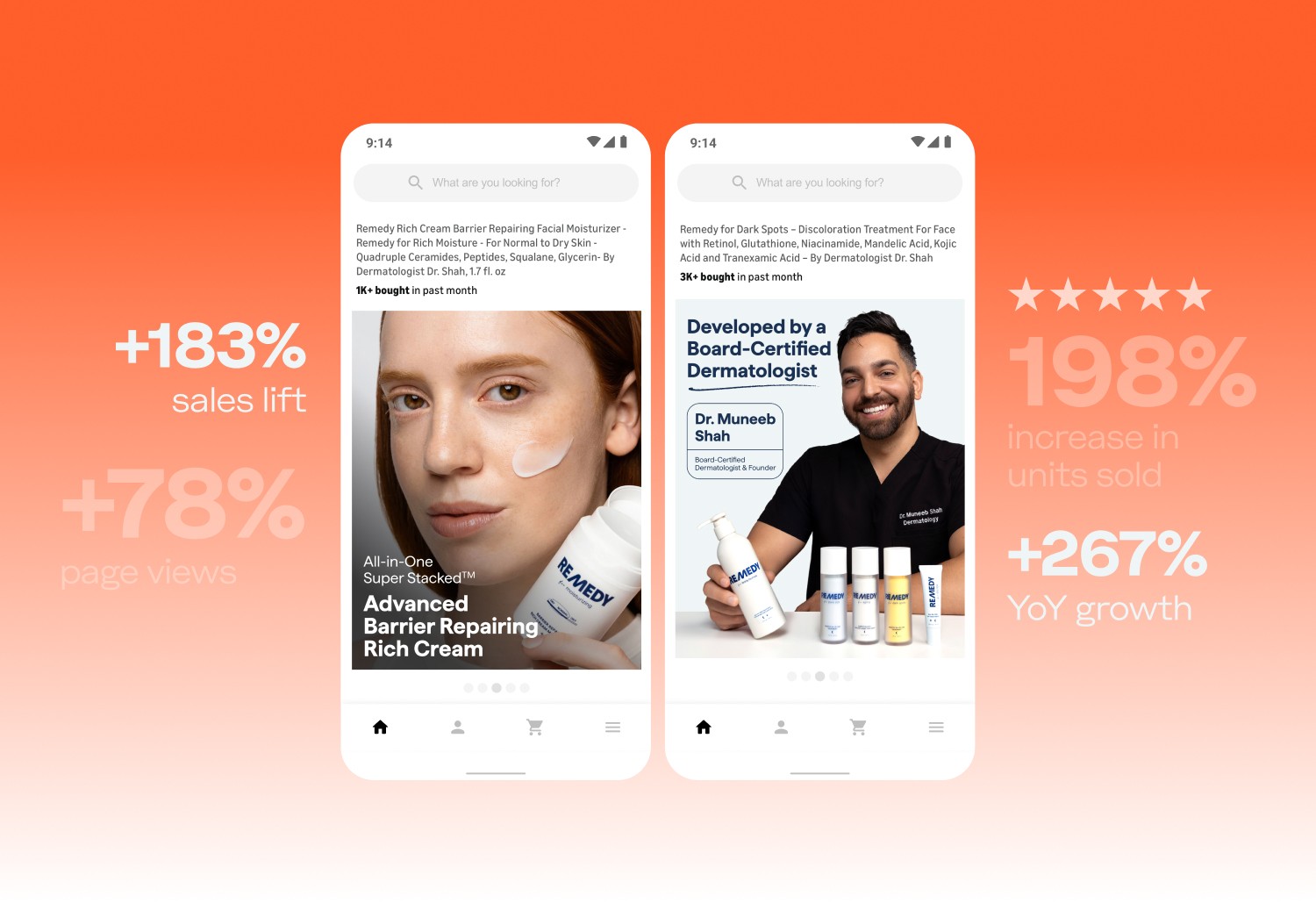
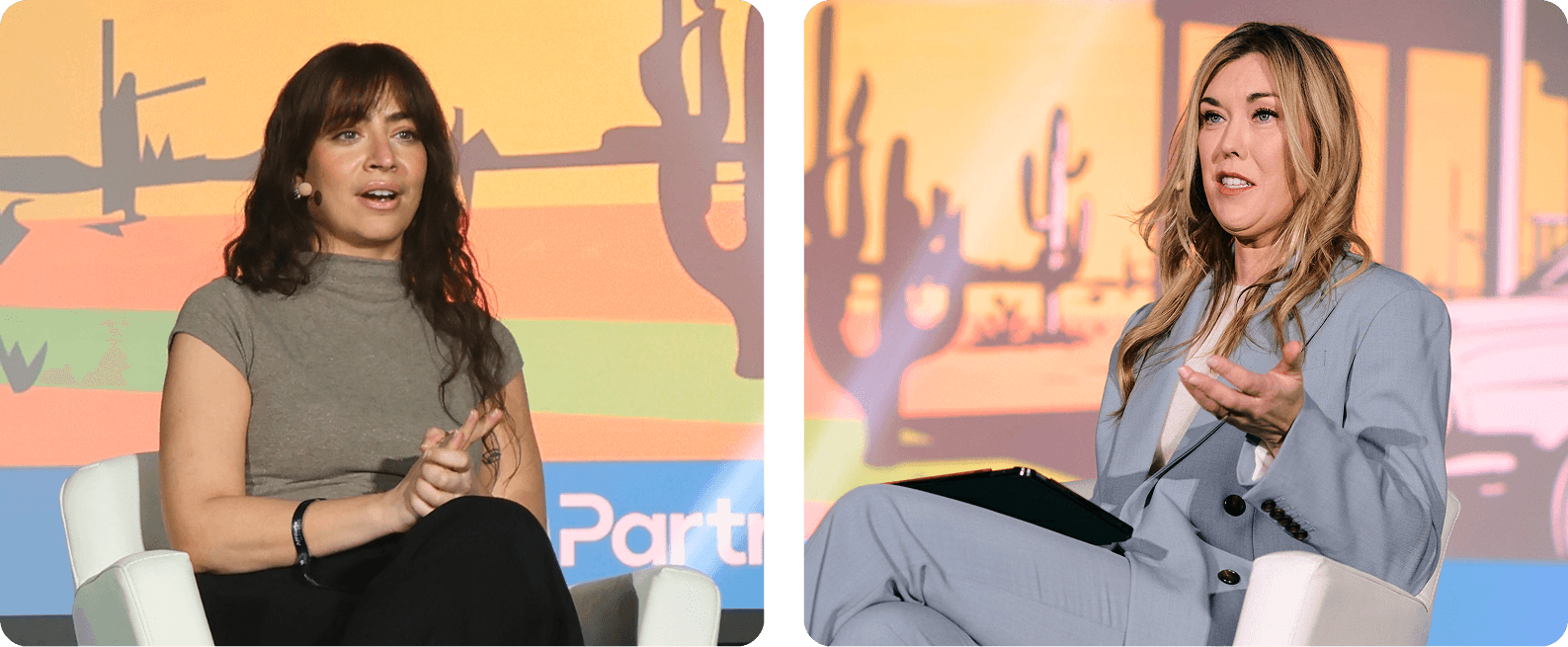
In January, at Affiliate Summit West, Luminary Retailers CEO Jessica Lukon joined Remedy’s VP of E-Commerce Marina Zitser for a fireside conversation about a challenge many beauty brands are quietly trying to solve.
Customers no longer shop in one place.
They might discover a product on TikTok, research ingredients or routines on a brand’s website, and ultimately purchase on Amazon. The customer journey now moves fluidly across platforms, which means the strategies brands use to support that journey have to evolve as well.
Throughout the conversation, one theme kept resurfacing: the brands growing fastest today aren’t simply expanding into more channels. They’re designing their strategies around customer intent, understanding where demand is created, where it builds, and where it ultimately converts.
Growth Looks Different Than It Used To
When Jessica asked Marina what “brand growth” actually means in 2026, the answer wasn’t a single metric. Growth, she explained, still centers around profitable revenue but how brands get there now happens in stages.
First, a brand has to determine whether demand already exists for its product. If customers are already searching for a solution, the opportunity becomes capturing that demand. If not, the focus shifts toward education and creating awareness around the problem itself.
Once demand exists, growth becomes a conversion challenge. After customers are acquired, the next phase shifts to retention and lifetime value. In that sense, brand growth today isn’t about pushing harder in one channel, it’s about understanding where demand lives and how customers move between channels over time.
Why Waiting Too Long to Launch on Amazon Can Be Costly
One topic that resonated with many in the room was a common hesitation brands have around launching on Amazon. Many founders feel their direct-to-consumer business should be fully optimized before expanding into marketplaces.
But waiting often comes with a hidden cost.
It’s not just delayed revenue, it’s delayed learning. Each platform reveals different signals about how customers think about a product: what language they search for, what benefits resonate, and which problems they’re actively trying to solve.
Launching earlier on Amazon allows brands to observe those signals sooner. By the time some brands decide they’re “ready,” competitors have already built the review base, organic ranking, and advertising momentum that drive marketplace success. Catching up at that point becomes far more expensive.
Why the Same Product Strategy Doesn’t Work Everywhere
One of the most interesting moments in the conversation came when the topic turned to product strategy and how dramatically it can shift depending on the channel.
On a brand’s website, bundles often perform extremely well. Customers arrive there looking for context and guidance. They want to understand routines, ingredients, and how products work together, and bundles simplify that decision.
Amazon customers approach the experience differently. In many cases, they arrive with a clear problem already in mind. They’re searching for something that solves it quickly and efficiently.
In that moment, bundles can actually create friction. Instead, hero SKUs - products with a clear promise tied to a searchable concern - tend to dominate performance on Amazon because they align with the speed and clarity of the search experience.
Designing Channels Around How Customers Decide
One framework shared during the fireside chat illustrated this idea through the lens of customer behavior. Instead of asking which channel a brand should prioritize, the framework starts with how a customer makes decisions: how clearly they understand their problem and how quickly they want to solve it.
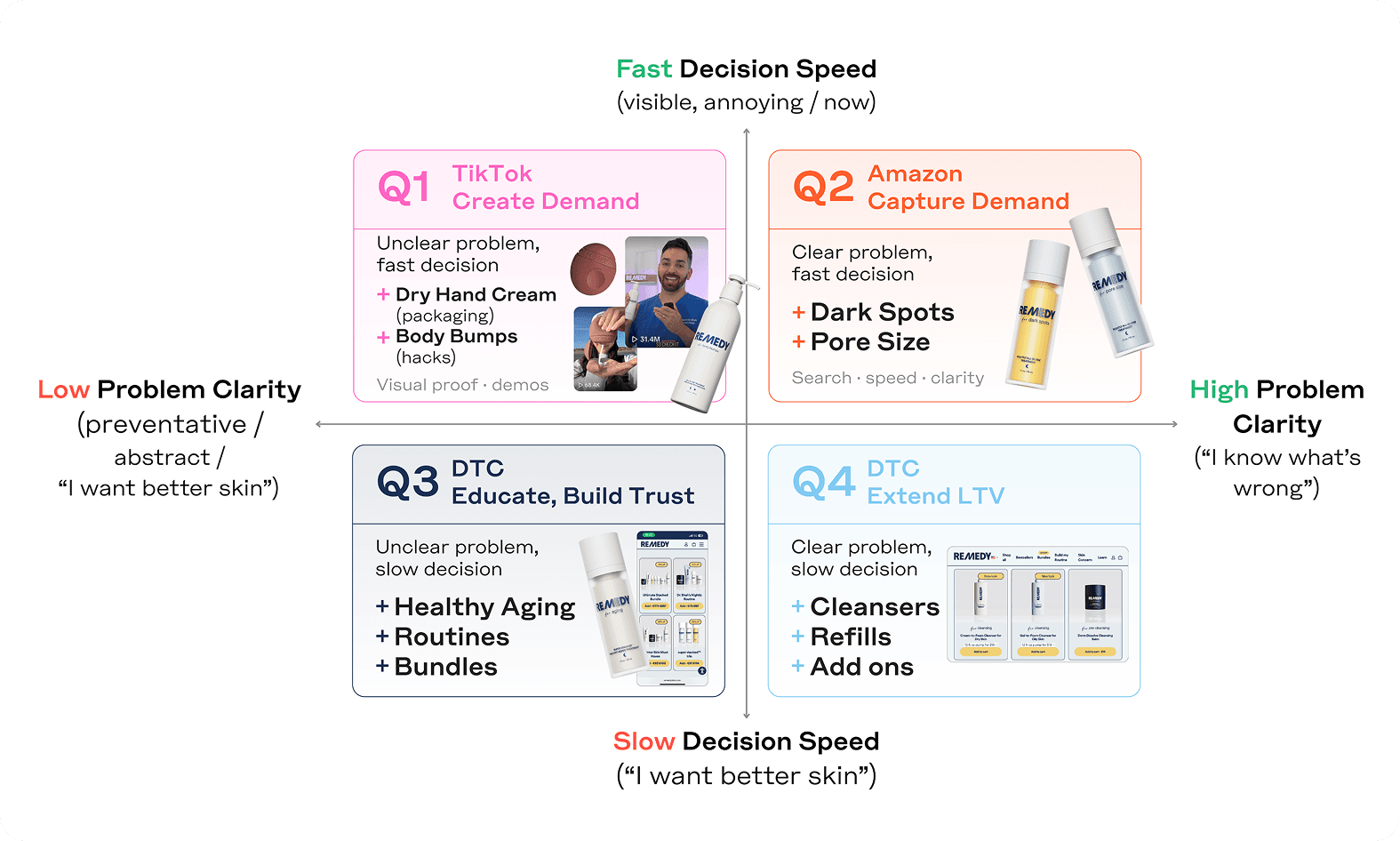
When viewed this way, the role of each channel becomes much clearer.
Platforms like TikTok often introduce a problem through visual discovery. A product demo, texture reveal, or transformation can spark awareness even before a customer knows how to describe the concern.
Brand websites, on the other hand, provide the space for education, guidance, and trust-building through routines or ingredient storytelling.
Amazon tends to capture demand when a customer already knows what they’re looking for and simply wants the fastest path to a solution.
Invisible Commerce Unveiled
When brands map their products to these decision environments, channels stop competing with each other and instead begin reinforcing one another.
The Brands Moving Fastest Are the Ones Willing to Test
Toward the end of the discussion, the conversation shifted to experimentation. In an industry where platforms evolve constantly, the brands making the most progress are often the ones willing to challenge their own assumptions.
Marina emphasized the importance of building a testing mindset across the organization. Rather than relying solely on dashboards or established best practices, teams should be willing to run meaningful experiments - adjusting budgets, testing different promotional approaches, or temporarily changing channel strategies to see what actually drives demand.
The goal isn’t simply optimization. It’s learning faster than the market changes.
The Bigger Takeaway
If there was one idea that tied the entire conversation together, it was this: channels shouldn’t compete with each other. They should compound.
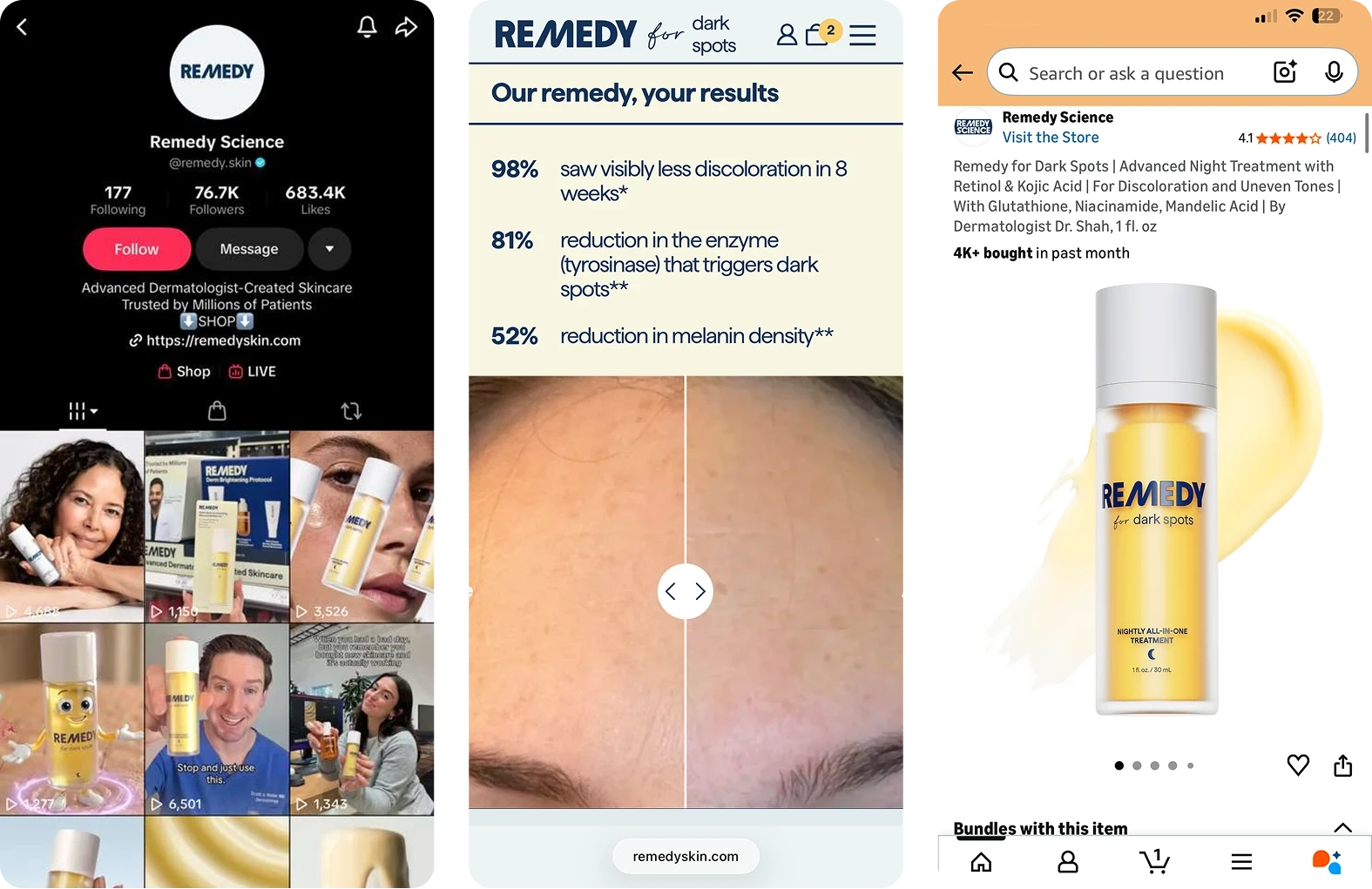
TikTok can spark curiosity and introduce a problem. Brand websites can build trust and deepen understanding. Amazon can capture the moment when a customer decides to buy.
When those roles are aligned, growth begins to build momentum across the entire ecosystem.
That’s the idea behind Invisible Commerce, designing a strategy where discovery, demand creation, and conversion reinforce one another across channels rather than existing in isolation.
Where Amazon Fits Into the Modern Beauty Growth Engine
For many beauty brands, Amazon sits at the center of that compounding system. With a large share of online beauty searches happening on the platform, customers often turn to Amazon when they’ve already decided what problem they want to solve.
The opportunity isn’t simply to “be present” on Amazon, it’s to ensure the brand is positioned to capture the demand being created everywhere else.
At Luminary Retailers, we partner with beauty brands to design Amazon strategies that support and strengthen their broader growth ecosystem. Because when the right products, messaging, and advertising are aligned with how customers actually shop, Amazon becomes more than a channel. It becomes a powerful engine for compounding growth.
About